
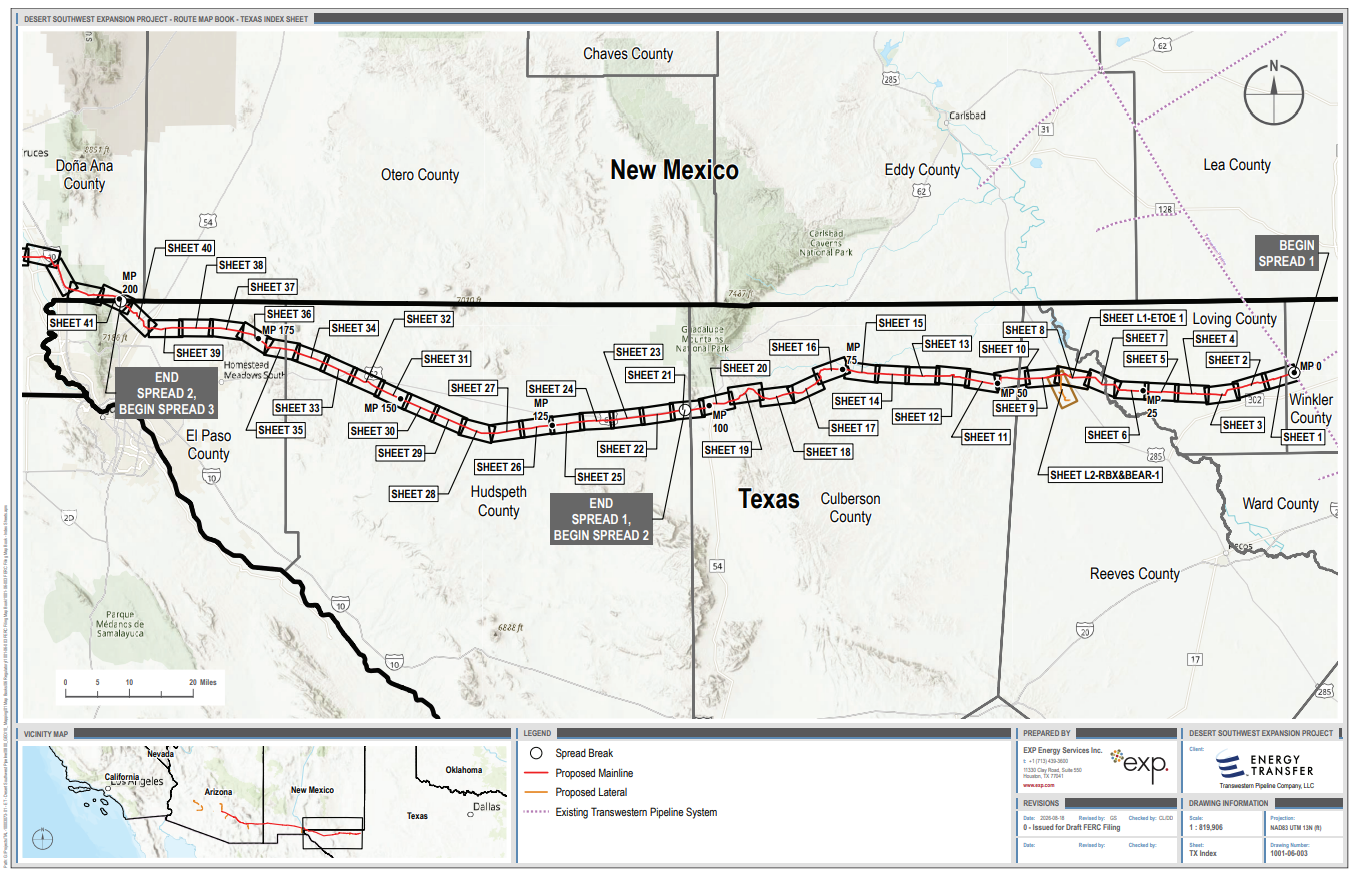
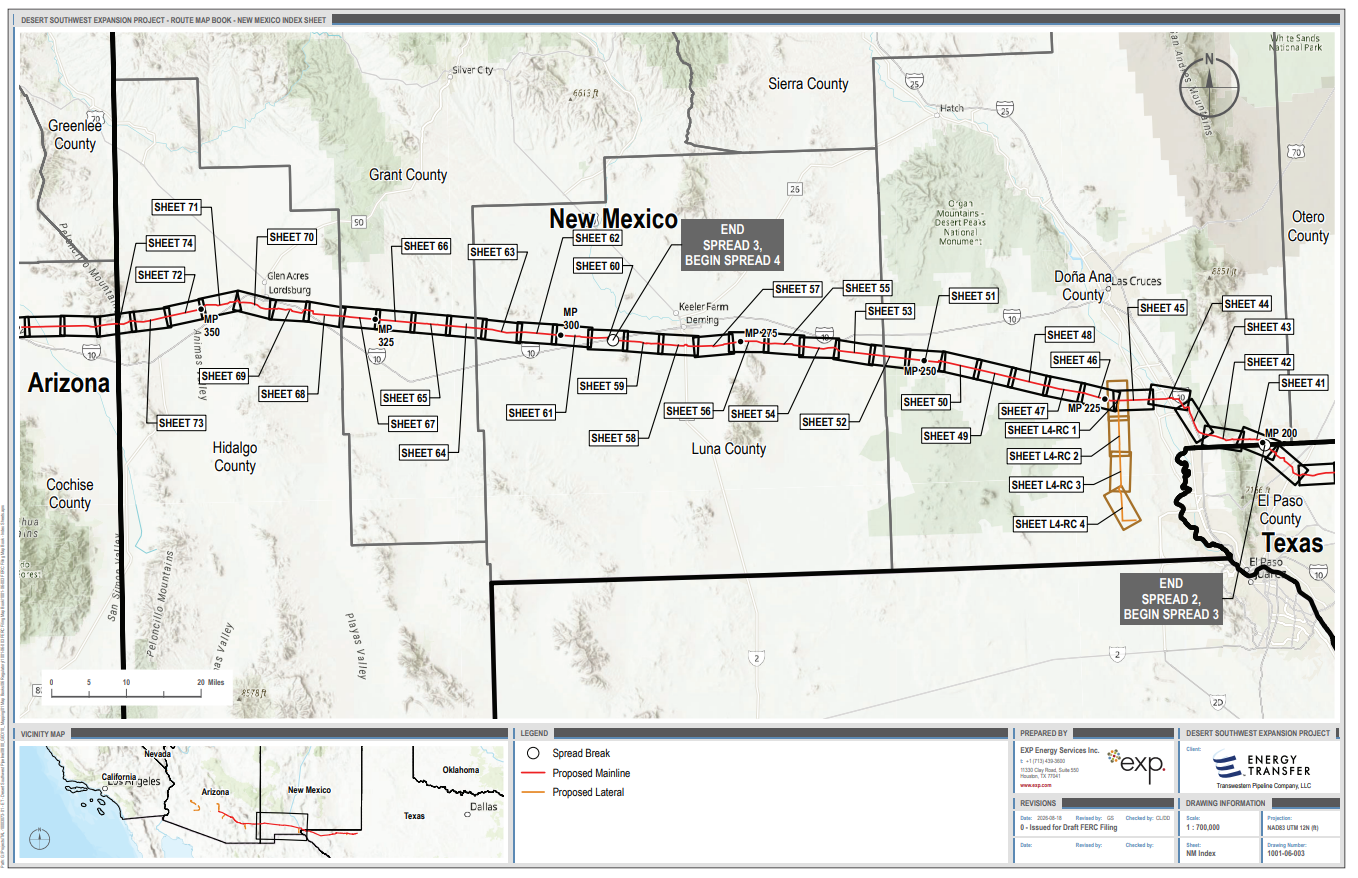
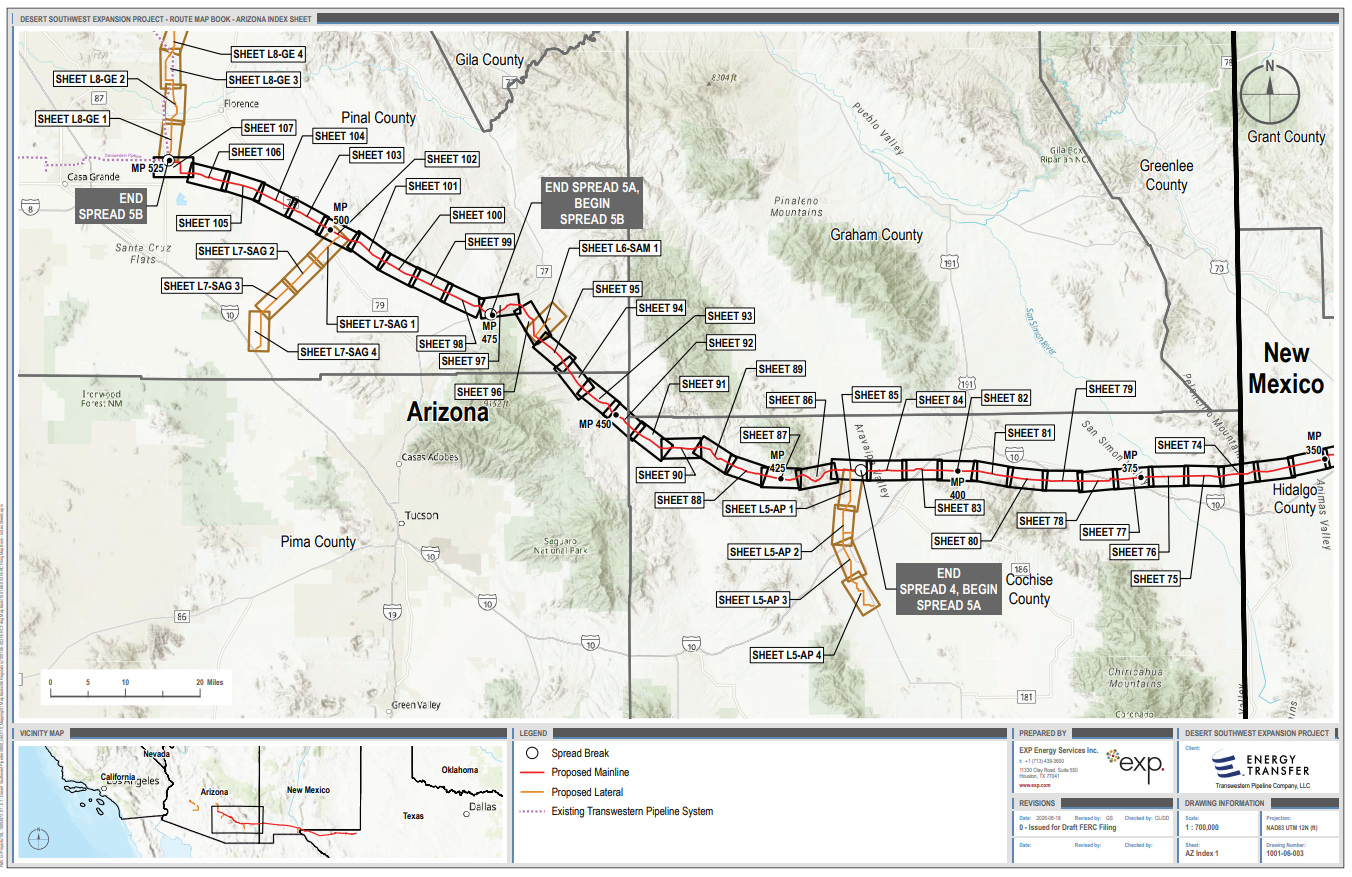
The Desert Southwest Pipeline Project is a proposed expansion of the Transwestern Pipeline system that would transport natural gas approximately 520 miles from West Texas through New Mexico and into Arizona. The project is designed to help meet increasing natural gas demand tied to population growth, economic development, industrial expansion, and rising energy use throughout Arizona and New Mexico.
Current Planning
The route, project details, and environmental studies are still being refined through ongoing surveys, stakeholder engagement, and regulatory review.
- New pipeline infrastructure
- Connections to existing systems
- Compressor station facilities
- Ongoing route and environmental analysis

Proposed Route
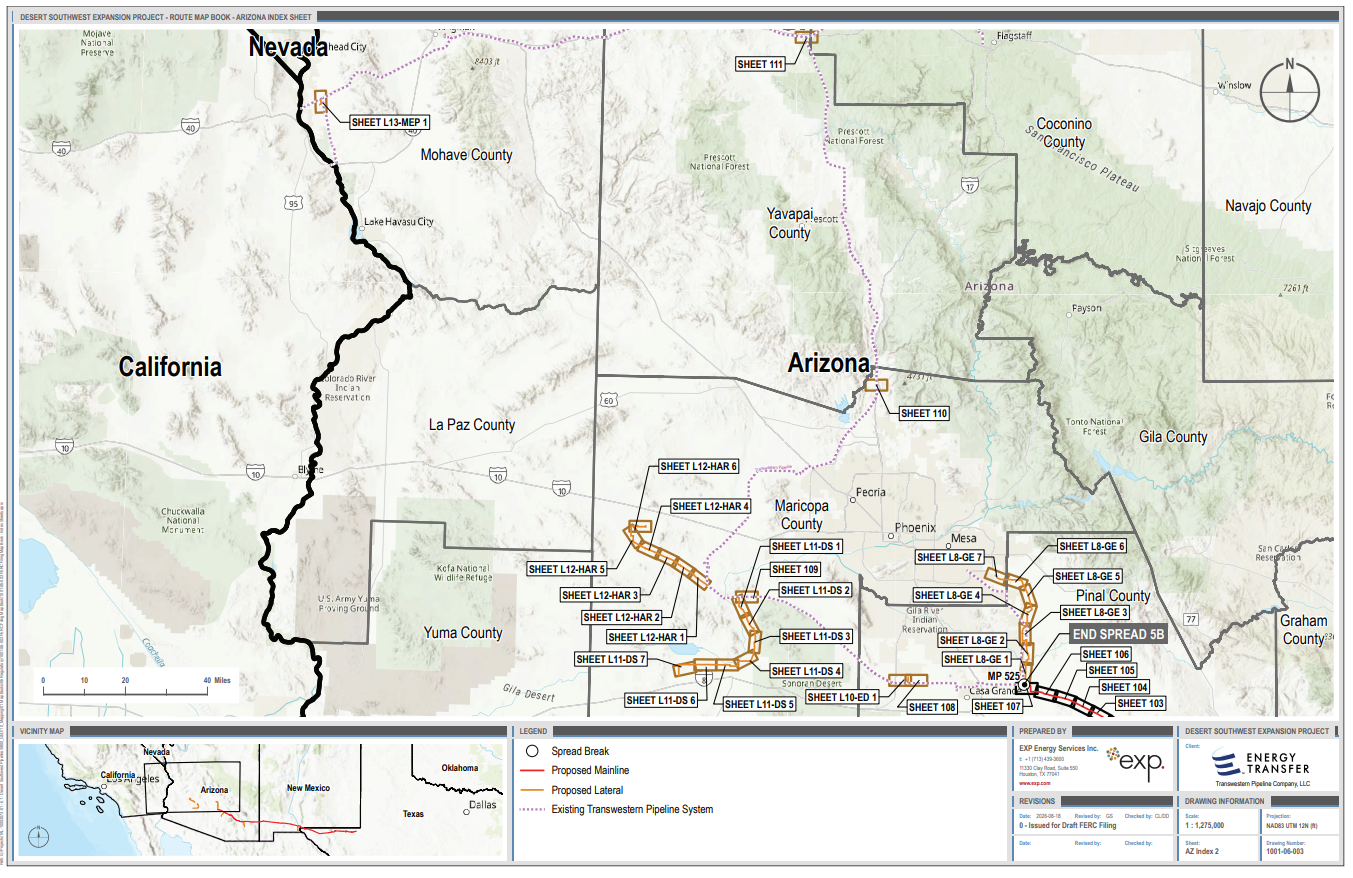
The proposed route would begin in West Texas and extend west through New Mexico before entering Arizona. Project planning currently focuses on identifying a route that balances constructability, environmental considerations, existing infrastructure corridors, land use, and regional energy needs. Because the route remains under evaluation, portions of the alignment may continue to change as studies, surveys, and stakeholder feedback are completed.
The underground pipeline will be powered by nine new compressor stations strategically situated along the pipeline route to deliver up to 2.3 billion cubic feet per day (Bcf/d) of natural gas to customers in the following areas: Loving County, TX, Doña Ana County, NM, Luna County, NM, Cochise County, AZ, Maricopa County, AZ, (3 potential delivery points), Pinal County, AZ, (3 delivery points), and Yuma County, AZ (potentially).
Project Timeline & Review Process
The Desert Southwest Pipeline Project remains in the planning and evaluation phase. Before construction would begin, the project will move through multiple stages of federal review, environmental analysis, engineering refinement, and public engagement. This process is designed to evaluate potential impacts, collect stakeholder input, and help inform final project decisions.

Energy Transfer/Transwestern announced the Desert Southwest Expansion, introducing the public to a 516-mile, 42-inch pipeline designed to move 1.5 Bcf/d of natural gas across Arizona, New Mexico, and Texas.

Transwestern closed its Open Season and began executing binding precedent agreements with shippers, the commercial step that confirms customer demand before a project moves into formal design.

The Federal Energy Regulatory Commission opened Docket No. PF26-9-000, formally starting the pre-filing review process ahead of the eventual certificate application.

As part of its stakeholder engagement program, Energy Transfer hosted 15 open houses in communities along the proposed pipeline route — the company’s own in-person touchpoint for answering landowner questions before the FERC scoping process began.

With the docket open, Transwestern began the “in progress” phase shown in the project materials: field surveys, detailed engineering design, and the first landowner open houses along the route.

FERC published its Notice of Scoping Period, opening the formal public comment window and announcing scoping sessions where landowners and communities can raise environmental concerns before the agency drafts its environmental review.
Construction
See how the Desert Southwest Pipeline Project will be built with a focus on safety, quality, and environmental stewardship. Walk through the construction process from route planning and permitting to testing, restoration, and long-term integrity monitoring. The pipeline will be buried a minimum of 3 feet in uplands, 5 feet at road crossings, and 4 feet through agricultural lands.

Safety At Every Stage
Safety is a core consideration throughout the Desert Southwest Project, from planning and construction to long-term operations. Project teams evaluate potential risks, follow established industry standards, coordinate with regulatory agencies, and develop procedures designed to help protect workers, communities, landowners, and the environment.

Regulated and Reviewed
The project must meet strict federal and state requirements before construction begins. Multiple agencies review and approve each phase to ensure safety, environmental protection, and compliance. Click here to view the FERC docket PF26-9-000.
The project will undergo regulatory review as part of the 7(c) process by numerous entities in each state, including:
- Federal Energy Regulatory Commission (FERC)
- Bureau of Land Management
- U.S. Army Corps of Engineers
- U.S. Fish & Wildlife Service
- U.S. Forest Service

Project Q&A
Is the route final?
No. The proposed route remains under evaluation and may continue changing as studies and project planning progress.
Who reviews the project?
Interstate natural gas pipeline projects typically move through federal environmental and regulatory review processes.
When would construction begin?
Construction timing would depend on permitting, environmental review, engineering completion, and project approvals.
How can the public stay informed?
Project updates, open house information, maps, and additional materials will continue being shared through the project website.